This week one of the greatest footballers of all-time passed away at the age of 75: Gerd Müller, is arguably the best striker of all time; although some of his records have been broken over the last years, he remains the most scoring player of the German league. He was for many years the most scoring player of the German national team with 62 goals in 68 matches (until Miroslav Klose beat him, but with more than 100 matches). He was European Footballer of the year in 1970, after he had become top-scorer at the 1970 World Cup, and his legend was perhaps cemented by his goal in the 1974 World Cup final, which gave West Germany the world championship:
Showing posts with label world cup 1974. Show all posts
Showing posts with label world cup 1974. Show all posts
Thursday, August 19, 2021


Saturday, July 12, 2014
The disappointer's final
Netherlands and Brazil will be facing none another in the unnecessary fight for third place in this year's world cup. For both sides this is a huge disappointment considering their expectations before the tournament, but they can really blame nobody else.
Brazil is there after crashing wildly on the expectations and their lack of preparation and focus. The humiliation by the Germans could give the players an incentive to try to get a bit of honor. On the other hand the huge level of disappointment at not playing the final could result in a poisonous lack of motivation.
The Dutch started the tournament flying against Spain, but steadily worsened. Already in their second match they struggled to defeat Australia. In their third match they played cynically to defeat a Chile side that was not nearly as good as people said. The Dutch then made it to the semifinal with a controversial win and an unimpressive penalty win against Mexico and Costa Rica respectively. Against Argentina they were unable or unwilling to take a risk and only had one meager shot on target.
With the offensive traditions and capabilities of Dutch football, this World Cup has continued the Dutch national team slide into boring result-oriented football that we saw in 2010. One of the most likable teams in the world has become one of the least unlikeable defensive side in the world.
The match today will be the fifth time the two sides are facing one another. In 1974 they played for the first time in a match where the Dutch won 2-0, exposing a violent and poor Brazilian side. This in fact led to a revision of Brazilian approach to youth development that still resonates today.
In 1994 they played what is perhaps the best match between them in the quarterfinal. Brazil was ahead but Netherlands equalized to 2-2, before the great Branco scored on an angry free kick to give Brazil the victory.
In 1998 both sides met again in the semifinals, in a match that went into penalty kicks. With Cocu and Ronald de Boer missing for the Dutch, Brazil made it to the final against France, which until recently remained their heaviest World Cup defeat!
The two sides lastly met in the quarterfinal of the 2010 World Cup. Netherlands came back from being 1-0 down to winning 1-2 on two strikes by Wesley Sneijder. The Dutch did not win many friends and went on to lose the World Cup final to Spain 1-0.
The match for bronze between Brazil and the Netherlands today, will be between two sides that have strayed away from their football roots; two sides that after being admired for decades, are now largely seen as shadows of their former selfs. I hope that I am not the only football fan out there that hopes that the match today will be the first step in both sides returning to their former glory, and to the admiration of football fans all over. Football Total and Jogo Bonito have given the world of football so much that I hope they return to their roots.
Brazil is there after crashing wildly on the expectations and their lack of preparation and focus. The humiliation by the Germans could give the players an incentive to try to get a bit of honor. On the other hand the huge level of disappointment at not playing the final could result in a poisonous lack of motivation.
The Dutch started the tournament flying against Spain, but steadily worsened. Already in their second match they struggled to defeat Australia. In their third match they played cynically to defeat a Chile side that was not nearly as good as people said. The Dutch then made it to the semifinal with a controversial win and an unimpressive penalty win against Mexico and Costa Rica respectively. Against Argentina they were unable or unwilling to take a risk and only had one meager shot on target.
With the offensive traditions and capabilities of Dutch football, this World Cup has continued the Dutch national team slide into boring result-oriented football that we saw in 2010. One of the most likable teams in the world has become one of the least unlikeable defensive side in the world.
The match today will be the fifth time the two sides are facing one another. In 1974 they played for the first time in a match where the Dutch won 2-0, exposing a violent and poor Brazilian side. This in fact led to a revision of Brazilian approach to youth development that still resonates today.
In 1994 they played what is perhaps the best match between them in the quarterfinal. Brazil was ahead but Netherlands equalized to 2-2, before the great Branco scored on an angry free kick to give Brazil the victory.
In 1998 both sides met again in the semifinals, in a match that went into penalty kicks. With Cocu and Ronald de Boer missing for the Dutch, Brazil made it to the final against France, which until recently remained their heaviest World Cup defeat!
The two sides lastly met in the quarterfinal of the 2010 World Cup. Netherlands came back from being 1-0 down to winning 1-2 on two strikes by Wesley Sneijder. The Dutch did not win many friends and went on to lose the World Cup final to Spain 1-0.
The match for bronze between Brazil and the Netherlands today, will be between two sides that have strayed away from their football roots; two sides that after being admired for decades, are now largely seen as shadows of their former selfs. I hope that I am not the only football fan out there that hopes that the match today will be the first step in both sides returning to their former glory, and to the admiration of football fans all over. Football Total and Jogo Bonito have given the world of football so much that I hope they return to their roots.
Thursday, January 14, 2010
Greatest World Cup Matches: West Germany-Netherlands (1974)
The two teams to dispute the final of the 1974 world cup in West Germany were undoubtedly the best teams in the world at the time: West Germany were defending European champions, and were led by Franz Beckenbauer, the Bayern Munich captain, and arguably one of the best players of all time. Solid on all places, they furthermore had the striker Gerd Müller, who after this tournament became the most scoring player of all world cups (until Ronaldo in 2002).
The home team had nevertheless not started the tournament well. In the first round they had only finished second in their group, after losing against East Germany in a politically loaded match in Hamburg. However, this match had apparently awakened the Germans, who in the second round had scored three consecutive victories against Yugoslavia, Sweden and Poland, to make it to the final.
In spite of playing at home in Munich in front of almost 80,000 fans, the Germans were not favourites: they were facing the Netherlands, a team that had taken the world with storm. Coached by the former Ajax Amsterdam coach Rinus Michels, the Dutch “orange machine” played a style of football that came to be known as “Total football”, putting pressure everywhere on the pitch with its many extraordinary players, notably Barcelona’s Johann Cruyff, the European footballer of the year in 1971, 1973 and in 1974, and one of the best players of all time.
The Dutch had been incredible the entire tournament, winning their first round group ahead of Sweden, Bulgaria and Uruguay, and in the second round cruising through Argentina, East Germany, and finally defeating the defending world champions of Brazil 2-0.
Thousands of Dutch fans had crossed over to West Germany from the Netherlands to see what was in reality an extraordinary feat for the small country against its big neighbour, who many Dutch people had a hateful relationship to. For instance, the Dutch Feyenoord player Wim Van Hanegem, who had lost his father and two brothers during WWII, expressed his disdain for Germans when stating "I don't like Germans. Everytime I played against German players, I had a problem because of the war."
The stage was thus set for an enormous drama in Munich.
And it all started well for the Dutch favourites. As they gave up the ball they passed the ball around, without a single German player getting a touch, when the ball landed with Johann Cruyff. The small Borussia Mönchengladbach player known as “the Terrier”, Bertie Vogts, was appointed as the player who was to neutralize Cruyff, but he was unable to stop the Dutchman in this first minute, as he rushed at full speed directly towards the German goal. As he entered the German area a desperate Uli Hoeness tackled him, and the English referee Jack Taylor correctly awarded a penalty for the Dutch. The Ajax Amsterdam (and that year Barcelona) striker Johann Neeskens took the penalty and scored his fifth goal of the tournament, and the Dutch machine was ahead 1-0 after only one minute.
The Germans had not even touched the ball yet.
But if one thing has characterized German football throughout football history, it is that German teams never give up, and in front of their home crowd, the West German side increasingly managed to fight themselves into the match, and in particular Berti Vogts completely managed to neutralize Johann Cruyff, while the Dutch thought that they had the match under control. Johann Cruyff later recalled: “Being ahead so soon caught us off balance since we never expected that defeating the hosts would be so easy. We had a sense of vertigo. Germany was almost defeated, but we then started to make mistakes. Germany didn’t win the world cup, but we lost it.”
The Dutch were overconfident, and 25 minutes into the first half they were punished when Eintracht Frankfurt’s Bernd Hölzenbein stormed down the left side, and in a rush that reminded of Cruyff’s 24 minutes earlier, stormed into the Dutch area, and right before shooting, was brought down by Feyenoord’s Wim Jansen.
Referee Jack Taylor awarded the Germans the second penalty kick ever in a world cup final, and the outstanding Bayern Munich defensive midfielder (soon to become Real Madrid player) Paul Breitner made no mistake in scoring the equalizer for West Germany.
In spite of the Netherlands still often controlling the ball, the Germans now seemed more solid all over the pitch. Almost at the end of the first half the youngest German player, Rainer Bonhof, passed the ball into Gerd Müller inside the Dutch penalty box. The pass was too close to Müllers feet and the ball bounced backwards, away from Müller and the Dutch defender, but in a split-second Müller turned and shot immediately, not too hard, but past Jan Jongbloed in the Dutch goal.
The home team was up 2-1 at half-time, with the Dutch effectively having thrown away their early advantage.
The Dutch tried to attack feverishly in the second half, but the solid German defense and an excellent Sepp Maier on goal, prevented the Netherlands from scoring. On the opposite side, West Germany had more chances on counter-attack, with a Gerd Müller goal even being disallowed for off-side. In any case, the 2-1 result held for West Germany, who twenty years after their first world title in Switzerland, West Germany had deservedly won the world championship at home against a Dutch team that remains one of the best teams ever never to have won the world cup.
Match Stats:
Goals: 0-1 Neeskens (1) (pen); 1-1 Breitner (25) (pen); 2-1 Muller (43)
Teams:
West Germany: Maier, Vogts, Schwarzenbeck, Beckenbauer, Breitner, Bonhof, Hoeness, Overath, Grabowski, Muller, Hölzenbein
Netherlands: Jongbloed, Suurbier, Rijsbergen (de Jong), Haan, Krol, Jansen, Van Hanegen, Neeskens, Rep, Cruyff, Rensenbrink (R. Van der Keerkof)
The home team had nevertheless not started the tournament well. In the first round they had only finished second in their group, after losing against East Germany in a politically loaded match in Hamburg. However, this match had apparently awakened the Germans, who in the second round had scored three consecutive victories against Yugoslavia, Sweden and Poland, to make it to the final.
In spite of playing at home in Munich in front of almost 80,000 fans, the Germans were not favourites: they were facing the Netherlands, a team that had taken the world with storm. Coached by the former Ajax Amsterdam coach Rinus Michels, the Dutch “orange machine” played a style of football that came to be known as “Total football”, putting pressure everywhere on the pitch with its many extraordinary players, notably Barcelona’s Johann Cruyff, the European footballer of the year in 1971, 1973 and in 1974, and one of the best players of all time.
The Dutch had been incredible the entire tournament, winning their first round group ahead of Sweden, Bulgaria and Uruguay, and in the second round cruising through Argentina, East Germany, and finally defeating the defending world champions of Brazil 2-0.
Thousands of Dutch fans had crossed over to West Germany from the Netherlands to see what was in reality an extraordinary feat for the small country against its big neighbour, who many Dutch people had a hateful relationship to. For instance, the Dutch Feyenoord player Wim Van Hanegem, who had lost his father and two brothers during WWII, expressed his disdain for Germans when stating "I don't like Germans. Everytime I played against German players, I had a problem because of the war."
The stage was thus set for an enormous drama in Munich.
And it all started well for the Dutch favourites. As they gave up the ball they passed the ball around, without a single German player getting a touch, when the ball landed with Johann Cruyff. The small Borussia Mönchengladbach player known as “the Terrier”, Bertie Vogts, was appointed as the player who was to neutralize Cruyff, but he was unable to stop the Dutchman in this first minute, as he rushed at full speed directly towards the German goal. As he entered the German area a desperate Uli Hoeness tackled him, and the English referee Jack Taylor correctly awarded a penalty for the Dutch. The Ajax Amsterdam (and that year Barcelona) striker Johann Neeskens took the penalty and scored his fifth goal of the tournament, and the Dutch machine was ahead 1-0 after only one minute.
The Germans had not even touched the ball yet.
But if one thing has characterized German football throughout football history, it is that German teams never give up, and in front of their home crowd, the West German side increasingly managed to fight themselves into the match, and in particular Berti Vogts completely managed to neutralize Johann Cruyff, while the Dutch thought that they had the match under control. Johann Cruyff later recalled: “Being ahead so soon caught us off balance since we never expected that defeating the hosts would be so easy. We had a sense of vertigo. Germany was almost defeated, but we then started to make mistakes. Germany didn’t win the world cup, but we lost it.”
The Dutch were overconfident, and 25 minutes into the first half they were punished when Eintracht Frankfurt’s Bernd Hölzenbein stormed down the left side, and in a rush that reminded of Cruyff’s 24 minutes earlier, stormed into the Dutch area, and right before shooting, was brought down by Feyenoord’s Wim Jansen.
Referee Jack Taylor awarded the Germans the second penalty kick ever in a world cup final, and the outstanding Bayern Munich defensive midfielder (soon to become Real Madrid player) Paul Breitner made no mistake in scoring the equalizer for West Germany.
In spite of the Netherlands still often controlling the ball, the Germans now seemed more solid all over the pitch. Almost at the end of the first half the youngest German player, Rainer Bonhof, passed the ball into Gerd Müller inside the Dutch penalty box. The pass was too close to Müllers feet and the ball bounced backwards, away from Müller and the Dutch defender, but in a split-second Müller turned and shot immediately, not too hard, but past Jan Jongbloed in the Dutch goal.
The home team was up 2-1 at half-time, with the Dutch effectively having thrown away their early advantage.
The Dutch tried to attack feverishly in the second half, but the solid German defense and an excellent Sepp Maier on goal, prevented the Netherlands from scoring. On the opposite side, West Germany had more chances on counter-attack, with a Gerd Müller goal even being disallowed for off-side. In any case, the 2-1 result held for West Germany, who twenty years after their first world title in Switzerland, West Germany had deservedly won the world championship at home against a Dutch team that remains one of the best teams ever never to have won the world cup.
Match Stats:
- 7th July, 1974, Olympia Stadion, Munich
- Attendance: 77,833
- Referee: John Taylor (England)
Goals: 0-1 Neeskens (1) (pen); 1-1 Breitner (25) (pen); 2-1 Muller (43)
Teams:
West Germany: Maier, Vogts, Schwarzenbeck, Beckenbauer, Breitner, Bonhof, Hoeness, Overath, Grabowski, Muller, Hölzenbein
Netherlands: Jongbloed, Suurbier, Rijsbergen (de Jong), Haan, Krol, Jansen, Van Hanegen, Neeskens, Rep, Cruyff, Rensenbrink (R. Van der Keerkof)
Thursday, January 07, 2010
Greatest World Cup Matches: Netherlands-Brazil (1974)
The tournament of 1974 was designed somewhat differently from the previous tournaments: instead of quarterfinals and semifinals, the winners and runners-up of each group would go through to two play-off groups of four teams, whose winners would then dispute the final.
In the second group stages the defending world champions of Brazil came face to face with the revelation of the tournament, the Dutch “Orange machine” in the last match of the groups that could see either side go to the world cup final.
After the great 1970 side, Brazil had undergone enormous changes; of the players that had played the 1970 final almost none were left, only Jairzinho and Rivelino, who were not able to lift the Brazilian play.
In spite of going undefeated through from the first round, Brazil had not been overwhelming: two 0-0 draws against Yugoslavia and Scotland, and a 3-0 victory against Zaire had been enough to just secure Brazil to go through ahead of Scotland on a one-goal difference. In the second round they still had a chance to get to the final though, as they had defeated East Germany and Argentina before the last match against the Netherlands, where a victory would put the South Americans in the final.
But the Brazilians were facing a confident Dutch side that had taken the world with storm. The Netherlands was coached by perhaps the greatest footballing genius ever, Rinus Michels, who had led Ajax Amsterdam to win the European Champions Cup in 1971, 1972 and 1974, by playing the style that came to be known as “Total Football”, where their extraordinarily athletic and technically-skilled players were able to play any position on the pitch, adapt their style to any opponent, and take advantage of any weak point in the opposition.
The Dutch team was full of many extraordinary players, many of whom had emerged from the Ajax Amsterdam footballing school. Among them, one stood out, namely the then-Barcelona player Johan Cruyff, who as Ajax Amsterdam player had been named European footballer of the year in 1971 and 1973 (and was to win the title again in 1974). Other of the extraordinary and versatile players were the Ajax midfielder Johan Neeskens, the also Ajax striker Johnny Rep, Anderlecht’s Rob Rensenbrink, and Feyenoord’s legendary defender Wim van Hanegem (Feyenoord had in fact won the European Champions Cup before Ajax in 1970 setting the stage for Dutch dominance in the 1970s).
Followed by a hordes of charming and orange-clad fans from across the Dutch-German border, the Dutch team had impressed everyone with their style. In the first round they had won their group after defeating Uruguay 2-0, Bulgaria 4-1 and tied 0-0 against Sweden. In their first two matches of the second round, they had destroyed Argentina 4-0 and defeated East Germany 2-0. Thus, a tie against Brazil would be enough to put them in the final.
Although Brazil had some chances at the start of the match, it was clear that the orange machine was making it difficult all over the pitch for the Brazilian world champions, who increasingly, as the game progressed became more foul in their attempts at stopping the Dutch attacking waves. Although first half ended 0-0, the Dutch had been the better side, and only five minutes into the second half, Netherlands went ahead: Johan Cruyff received the ball from Neeskens on the right side, and Neeskens himself ran forward into the Brazilian area. Cruyff crossed into the area where Neeskens just got ahead of the Brazilian defender and elegantly lifted the ball over the goalkeeper.
The Brazilians now had to score twice, but were unable to do anything against the strong Dutch, and only fifteen minutes later the Dutch scored again, this time on a goal by Cruyff himself, who in perfect balance first-timed a cross from Rensenbrink on the left side.
The goal frustrated the already tense Brazilians, who played uglier and made some extremely harsh attacks on the Dutch players. This culminated in the last minutes of the match when Atlético Madrid’s defender Luis Pereira was shown the red card after a vicious tackle on Neeskens. Pereira left the pitch making provocative signs at the Dutch fans.
The defending champions had not fallen with grace against a Dutch side that the entire football-loving world had fallen in love with, and were to take on the West German hosts in the final in Munich.
Although one of the best teams ever, the Dutch lost the final to the efficient Germans 2-1.
Match Stats:
Goals: 1-0 Neeskens (50); 2-0 Cruyff (65)
Teams:
Netherlands: Jongbloed; Haan, Van Hanegen, Jansen, Krol, Neeskens (Israel), Cruyff, Rensenbrink (de Jong), Suurbier, Rijsbergen, Rep
Brazil: Leão; Luis Pereira (RC, 84), Marinho Peres, Ze Maria, Marinho Chagas, Jairzinho, Rivelino, Paulo Cesar (Mirandinha), Valdomiro, Carpegiani, Dirceu
In the second group stages the defending world champions of Brazil came face to face with the revelation of the tournament, the Dutch “Orange machine” in the last match of the groups that could see either side go to the world cup final.
After the great 1970 side, Brazil had undergone enormous changes; of the players that had played the 1970 final almost none were left, only Jairzinho and Rivelino, who were not able to lift the Brazilian play.
In spite of going undefeated through from the first round, Brazil had not been overwhelming: two 0-0 draws against Yugoslavia and Scotland, and a 3-0 victory against Zaire had been enough to just secure Brazil to go through ahead of Scotland on a one-goal difference. In the second round they still had a chance to get to the final though, as they had defeated East Germany and Argentina before the last match against the Netherlands, where a victory would put the South Americans in the final.
But the Brazilians were facing a confident Dutch side that had taken the world with storm. The Netherlands was coached by perhaps the greatest footballing genius ever, Rinus Michels, who had led Ajax Amsterdam to win the European Champions Cup in 1971, 1972 and 1974, by playing the style that came to be known as “Total Football”, where their extraordinarily athletic and technically-skilled players were able to play any position on the pitch, adapt their style to any opponent, and take advantage of any weak point in the opposition.
The Dutch team was full of many extraordinary players, many of whom had emerged from the Ajax Amsterdam footballing school. Among them, one stood out, namely the then-Barcelona player Johan Cruyff, who as Ajax Amsterdam player had been named European footballer of the year in 1971 and 1973 (and was to win the title again in 1974). Other of the extraordinary and versatile players were the Ajax midfielder Johan Neeskens, the also Ajax striker Johnny Rep, Anderlecht’s Rob Rensenbrink, and Feyenoord’s legendary defender Wim van Hanegem (Feyenoord had in fact won the European Champions Cup before Ajax in 1970 setting the stage for Dutch dominance in the 1970s).
Followed by a hordes of charming and orange-clad fans from across the Dutch-German border, the Dutch team had impressed everyone with their style. In the first round they had won their group after defeating Uruguay 2-0, Bulgaria 4-1 and tied 0-0 against Sweden. In their first two matches of the second round, they had destroyed Argentina 4-0 and defeated East Germany 2-0. Thus, a tie against Brazil would be enough to put them in the final.
Although Brazil had some chances at the start of the match, it was clear that the orange machine was making it difficult all over the pitch for the Brazilian world champions, who increasingly, as the game progressed became more foul in their attempts at stopping the Dutch attacking waves. Although first half ended 0-0, the Dutch had been the better side, and only five minutes into the second half, Netherlands went ahead: Johan Cruyff received the ball from Neeskens on the right side, and Neeskens himself ran forward into the Brazilian area. Cruyff crossed into the area where Neeskens just got ahead of the Brazilian defender and elegantly lifted the ball over the goalkeeper.
The Brazilians now had to score twice, but were unable to do anything against the strong Dutch, and only fifteen minutes later the Dutch scored again, this time on a goal by Cruyff himself, who in perfect balance first-timed a cross from Rensenbrink on the left side.
The goal frustrated the already tense Brazilians, who played uglier and made some extremely harsh attacks on the Dutch players. This culminated in the last minutes of the match when Atlético Madrid’s defender Luis Pereira was shown the red card after a vicious tackle on Neeskens. Pereira left the pitch making provocative signs at the Dutch fans.
The defending champions had not fallen with grace against a Dutch side that the entire football-loving world had fallen in love with, and were to take on the West German hosts in the final in Munich.
Although one of the best teams ever, the Dutch lost the final to the efficient Germans 2-1.
Match Stats:
- 3rd July 1974, Westfalenstadium, Dortmund
- Attendance: 52,000
- Referee: Kurt Tschenscher (West Germany)
Goals: 1-0 Neeskens (50); 2-0 Cruyff (65)
Teams:
Netherlands: Jongbloed; Haan, Van Hanegen, Jansen, Krol, Neeskens (Israel), Cruyff, Rensenbrink (de Jong), Suurbier, Rijsbergen, Rep
Brazil: Leão; Luis Pereira (RC, 84), Marinho Peres, Ze Maria, Marinho Chagas, Jairzinho, Rivelino, Paulo Cesar (Mirandinha), Valdomiro, Carpegiani, Dirceu
Thursday, December 31, 2009
Greatest World Cup Matches: West Germany-East Germany (1974)
Football is more than just a game: as the “real” world unfolds, football becomes caught up in it, and particular matches have particular political symbolism. One such match was when West Germany played East Germany in the 1974 World Cup.
Since the end of WWII the divided Germany had become the main arena for the ongoing Cold War between East and West. While the World Cup in West Germany had been decided in 1966, the early 1970s were full of political tensions that more or less indirectly affected the world cup: the USSR did not participate after they refused to play a play-off match against the newly installed Pinochet regime in Chile, and security during the tournament was intense after the Palestinean terrorist attacks during the Olympics games in Munich two years before as well as the fear of the German Rote Armee Fraktion.
It was thus part of the political tensions when West Germany and East Germany drew each other in the first round of the World Championship to play in what is surely the most politically tense match in the history of the world cup (and that is why it is included here); the two Germany’s has started a process of normalization in the early 1970’s, and had only recognised each other in the Basic treaty of 1972.
As soon as it became clear that the two teams would face each other in a serious match for the first time ever (they had met in Olympic amateur matches), the “brotherly” match between the two German nations become more than just a football match, catching the attention of not only the politicial leadership of the two countries, but also of the people’s of both countries.
The match was to be the last match of the first round, which had started well for both teams: West Germany had defeated Chile and Australia, while the East Germans had defeated Australia and tied Chile. As Australia and Chile tied 0-0 in their last match, it became clear that both German teams would qualify, no matter the result of the match in Hamburg.
Still, it was an important match, and for sure the West Germans were huge favourites: besides being at home, the team was defending European champions, and had a core of players from the Bayern Munich team that barely a month earlier had lifted the European Champions Cup trophy after crushing Atlético Madrid in the final.
Nevertheless, the East Germans had a good team as well; the East German champions FC Magdeburg had also had European glory a month before when they won the European Cup winners Cup by defeating AC Milan 2-0. Many players had good Olympic experience, having won bronze at the 1972 Olympics (and they would win gold in 1976).
Besides each team’s strength, the players from both sides were very aware of the importance of the match. Still, the West Germans were, prior to the match, largely dismissing the East Germans, sure of a victory that would give them the group victory. In spite of this apparent arrogance, many East German fans supported the West German side, living as they did under a communist regime that was highly restrictive. Only 1500 specially selected East German fans were allowed to travel to Hamburg by train, for a match with 60,000 spectators.
It was not the best match though. The West Germans were perhaps surprised by the well-organised East Germans, but the match in first half didn’t flow well, although both teams had chances that should have resulted in goals. This theme continued in the second half, until a long ball was kicked towards the Magdeburg striker Jurgen Sparwasser, who in full speed got in between three German defenders and kicked the ball over the legendary West German goalkeeper Sepp Maier.
This goal was enough for the East Germans to win the group, and they celebrated when the referee ended the match. This was a victory that resounded in the world.
However, the continued world cup went differently for both teams. East Germany, who had paradoxically won the group, now had to face the strong sides of Brazil and the Netherlands, and were indeed eliminated. On the other hand, West Germany had an easier draw and won ther rest of their matches, also the final against the Netherlands, to become world champions, and easily forget the humilliating defeat against East Germany.
In the qualifiers for the European Championship of 1992, East and West Germany drew each other. However, before they could meet towards the end of 1990, political events overtook them: the wall fell and the two Germanies were reunified, and has since played as one country.
Still, their encounter in 1974 will be remembered as the most important match these two nations played at a time when Germany was two.
Match Stats:
Goals: 0-1 Sparwasser (77)
Teams:
West Germany: Maier; Vogts, Breitner, Schwarzenbeck (Hoettges), Beckenbauer, Cullmann, Grabowski, Overath (Netzer), G. Muller, Hoeness, Flohe
East Germany: Croy; Kurbjuweit, Bransch, Weise, Kreische, Waetzlich, Lauck, Sparwasser, Irmscher (Hamann), Kische, Hoffmann
Since the end of WWII the divided Germany had become the main arena for the ongoing Cold War between East and West. While the World Cup in West Germany had been decided in 1966, the early 1970s were full of political tensions that more or less indirectly affected the world cup: the USSR did not participate after they refused to play a play-off match against the newly installed Pinochet regime in Chile, and security during the tournament was intense after the Palestinean terrorist attacks during the Olympics games in Munich two years before as well as the fear of the German Rote Armee Fraktion.
It was thus part of the political tensions when West Germany and East Germany drew each other in the first round of the World Championship to play in what is surely the most politically tense match in the history of the world cup (and that is why it is included here); the two Germany’s has started a process of normalization in the early 1970’s, and had only recognised each other in the Basic treaty of 1972.
As soon as it became clear that the two teams would face each other in a serious match for the first time ever (they had met in Olympic amateur matches), the “brotherly” match between the two German nations become more than just a football match, catching the attention of not only the politicial leadership of the two countries, but also of the people’s of both countries.
The match was to be the last match of the first round, which had started well for both teams: West Germany had defeated Chile and Australia, while the East Germans had defeated Australia and tied Chile. As Australia and Chile tied 0-0 in their last match, it became clear that both German teams would qualify, no matter the result of the match in Hamburg.
Still, it was an important match, and for sure the West Germans were huge favourites: besides being at home, the team was defending European champions, and had a core of players from the Bayern Munich team that barely a month earlier had lifted the European Champions Cup trophy after crushing Atlético Madrid in the final.
Nevertheless, the East Germans had a good team as well; the East German champions FC Magdeburg had also had European glory a month before when they won the European Cup winners Cup by defeating AC Milan 2-0. Many players had good Olympic experience, having won bronze at the 1972 Olympics (and they would win gold in 1976).
Besides each team’s strength, the players from both sides were very aware of the importance of the match. Still, the West Germans were, prior to the match, largely dismissing the East Germans, sure of a victory that would give them the group victory. In spite of this apparent arrogance, many East German fans supported the West German side, living as they did under a communist regime that was highly restrictive. Only 1500 specially selected East German fans were allowed to travel to Hamburg by train, for a match with 60,000 spectators.
It was not the best match though. The West Germans were perhaps surprised by the well-organised East Germans, but the match in first half didn’t flow well, although both teams had chances that should have resulted in goals. This theme continued in the second half, until a long ball was kicked towards the Magdeburg striker Jurgen Sparwasser, who in full speed got in between three German defenders and kicked the ball over the legendary West German goalkeeper Sepp Maier.
This goal was enough for the East Germans to win the group, and they celebrated when the referee ended the match. This was a victory that resounded in the world.
However, the continued world cup went differently for both teams. East Germany, who had paradoxically won the group, now had to face the strong sides of Brazil and the Netherlands, and were indeed eliminated. On the other hand, West Germany had an easier draw and won ther rest of their matches, also the final against the Netherlands, to become world champions, and easily forget the humilliating defeat against East Germany.
In the qualifiers for the European Championship of 1992, East and West Germany drew each other. However, before they could meet towards the end of 1990, political events overtook them: the wall fell and the two Germanies were reunified, and has since played as one country.
Still, their encounter in 1974 will be remembered as the most important match these two nations played at a time when Germany was two.
Match Stats:
- 22nd June 1974, Volksparkstadium, Hamburg
- Attendance: 60,350
- Referee: Ramón Barreto Ruiz (Uruguay)
Goals: 0-1 Sparwasser (77)
Teams:
West Germany: Maier; Vogts, Breitner, Schwarzenbeck (Hoettges), Beckenbauer, Cullmann, Grabowski, Overath (Netzer), G. Muller, Hoeness, Flohe
East Germany: Croy; Kurbjuweit, Bransch, Weise, Kreische, Waetzlich, Lauck, Sparwasser, Irmscher (Hamann), Kische, Hoffmann
Thursday, December 24, 2009
Greatest World Cup Matches: Yugoslavia-Zaire (1974)
Zaire in 1974 was ruled by the despotic ruler Mobutu Sese Seko who ruled the country with an iron fist, and at the same time wanted to make the country a beacon of African sports. In December 1973 the Zairian national team, also known as “the Leopards”, became only the third African country to ever qualify for a World Cup, when they defeated the otherwise fancied Moroccans (who had qualified in 1970) 3-0 in an intense match in Kinshasa.
Zaire was the first sub-Saharan African country to ever qualify for a World Cup, and the country was ecstatic: Mobuto Sese-Seko gave each player a car and a house, and made high promises to the expectant players who would nevertheless go on to make a pathetic debut for sub-Saharan Africa in the World Cup.
The Africans were paired in a group with Brazil, Scotland and Yugoslavia. In their opening match, they lost 2-0 to Scotland, and were in their second match to face the strong Yugoslavs, who had opened their participation by tying 0-0 with the defending world champions of Brazil.
Zaire in fact had a Yugoslavian coach, who had been paid by Mobuto Sese-Seko’s millions: Blagoja Vidinic had also brought Morocco to the World Cup in 1970, and had now repeated the feat with the Zaireans. However, the team was, prior to the match against Yugoslavia, plagued by problems outside Vidinic’s control: in the despotic atmosphere of intimidation and rewards, the Zaireans players, who were expecting to be well-rewarded for their participation, were told that they would not be paid for their participation. At first, the players refused to play, but when threatened by the vicious secret service of Mobuto Sese-Seko, nevertheless went on the pitch for one of the most humiliating defeats in world cup history: the Zaireans hardly fought as the well-playing Yugoslavs ran around them on the pitch. The score was 5-0 after only half an hour, with five different goal-scorers. The Yugoslavs, seeing that they didn’t need to press the result, somewhat relaxed in the second half, but still made it to a stunning 9-0 win, with the Velez Mostar striker Dusan Bajevic (and current AEK Athens coach) scoring three of the goals.
At the time, this was the greatest defeat ever in world cup history (until 1982, when Hungary defeated El Salvador 10-1) and sub-Saharan Africa had been thoroughly humiliated.
The Zairean authorities immediately went on to put the blame on Vidinic, while the players had to be threatened from not being allowed to return home in case they were again humiliated by the Brazilians in their last match (they lost 3-0).
With a pathetic score of 0-14 and three defeats, the debut of sub-Saharan Africa in the World Cup was nothing to be proud of, but was fortunately only a one-off incident as other African nations were soon to take over and raise Africa’s profile in the world cup.
Match Stats:
Goals: 1-0 Bajevic (8); 2-0 Dzajic (14); 3-0 Surjak (18); 4-0 Katalinski (22); 5-0 Bajevic (30); 6-0 Bogicevic (35); 7-0 Oblak (61); 8-0 Petkovic (65); 9-0 Bajevic (81)
Teams:
Yugoslavia: Maric; Buljan, Hadziabdic, Katalinski, Bogicevic, Petkovic, Oblak, Surjak, Acimovic, Dzajic, Bajevic
Zaire: Kazadi (Tubilandu); Mwepu, Mukombo, Buhanga, Lobilo, Kilasu, Mana, Kembo, Kidumu, Ndaye, Kakoko (Maku)
Zaire was the first sub-Saharan African country to ever qualify for a World Cup, and the country was ecstatic: Mobuto Sese-Seko gave each player a car and a house, and made high promises to the expectant players who would nevertheless go on to make a pathetic debut for sub-Saharan Africa in the World Cup.
The Africans were paired in a group with Brazil, Scotland and Yugoslavia. In their opening match, they lost 2-0 to Scotland, and were in their second match to face the strong Yugoslavs, who had opened their participation by tying 0-0 with the defending world champions of Brazil.
Zaire in fact had a Yugoslavian coach, who had been paid by Mobuto Sese-Seko’s millions: Blagoja Vidinic had also brought Morocco to the World Cup in 1970, and had now repeated the feat with the Zaireans. However, the team was, prior to the match against Yugoslavia, plagued by problems outside Vidinic’s control: in the despotic atmosphere of intimidation and rewards, the Zaireans players, who were expecting to be well-rewarded for their participation, were told that they would not be paid for their participation. At first, the players refused to play, but when threatened by the vicious secret service of Mobuto Sese-Seko, nevertheless went on the pitch for one of the most humiliating defeats in world cup history: the Zaireans hardly fought as the well-playing Yugoslavs ran around them on the pitch. The score was 5-0 after only half an hour, with five different goal-scorers. The Yugoslavs, seeing that they didn’t need to press the result, somewhat relaxed in the second half, but still made it to a stunning 9-0 win, with the Velez Mostar striker Dusan Bajevic (and current AEK Athens coach) scoring three of the goals.
At the time, this was the greatest defeat ever in world cup history (until 1982, when Hungary defeated El Salvador 10-1) and sub-Saharan Africa had been thoroughly humiliated.
The Zairean authorities immediately went on to put the blame on Vidinic, while the players had to be threatened from not being allowed to return home in case they were again humiliated by the Brazilians in their last match (they lost 3-0).
With a pathetic score of 0-14 and three defeats, the debut of sub-Saharan Africa in the World Cup was nothing to be proud of, but was fortunately only a one-off incident as other African nations were soon to take over and raise Africa’s profile in the world cup.
Match Stats:
- 18th June 1974, Parkstadium, Gelsenkirchen
- Attendance: 20,000
- Referee: Omar Delgado (Colombia)
Goals: 1-0 Bajevic (8); 2-0 Dzajic (14); 3-0 Surjak (18); 4-0 Katalinski (22); 5-0 Bajevic (30); 6-0 Bogicevic (35); 7-0 Oblak (61); 8-0 Petkovic (65); 9-0 Bajevic (81)
Teams:
Yugoslavia: Maric; Buljan, Hadziabdic, Katalinski, Bogicevic, Petkovic, Oblak, Surjak, Acimovic, Dzajic, Bajevic
Zaire: Kazadi (Tubilandu); Mwepu, Mukombo, Buhanga, Lobilo, Kilasu, Mana, Kembo, Kidumu, Ndaye, Kakoko (Maku)
Tuesday, June 06, 2006
Top 5 Best teams that never won a World Cup
With the World Cup coming up, the World Cup historical geeks start discussing before games. An interesting one I heard recently was the a discussion on the top 5 best teams that had not won a World Cup. I have spent some time thinking about this list. I find it a big difficult, because should it entail teams that almost won it? Teams that played very well but did not make it far, or teams that should have won it, but lost after huge upset?
My very personal top 5 (which I will defend any time though) is:5. Brazil 1950: Brazil should have won its first World Cup ever in 1950, at home in Maracana, in front of a record crowd of 200,000 spectators. Instead, facing all the adversity in the world, little Uruguay put a stop to the celebrations in all Brazil, to give the Brazilians their most painful defeat ever, by winning 2-1. Brazil has still never won the World Championship on own soil.
4. Czechoslovakia 1934: The Czechoslovaks had one of the best teams of the world in the mid 1930's, although playing a World Cup final in Rome during Mussolini was never going to be an easy task. Il Duce made sure that Italy would have all advantages, even a very friendly referee. In spite of this, the Italians only managed a narrow 2-1 victory after extra time.
3. Brazil 1982: 1982 and 1986 probably were the two World Cups with most of the legendary players assembled at one time. The teams were amazing, and it is difficult to choose one that could not have been a worthy champion (France, Germany, Poland...). However, I have chosen Brazil, because it was undoubtfully one of the most talented generations of Brazilian football: Zico, Socrates, Falcao, Junior, Cerezo, etc. In spite of their magic, they never lifted the trophy.
2. Netherlands 1974: This team, led by the legendary Johann Cruyff, took the world with storm with its relaxed attitude and marvelous "Total Football". They were a beauty to watch, and were far superior to every team in 1974 in Germany. Until the final, they had cruised through, even trashing the mighty Brazilians. In the final in Munich, they started with a pentalty goal in the first minute against the West German hosts. However, the Germans managed to fight back to win 2-1 in one of the most legendary finals of all time.
1. Hungary 1954: In the first half of the 1950's, Hungary had the best team in the world. Led by legendary Puskas, and with amazing strikers such as Hidegkuti and Koscic, Hungary entered the 1954 World Cup without having lost a game for 3 years. In Switzerland, they started amazing, scoring amazing 25 goals in 4 games. In the final against Germany, they started by getting ahead 2-0 after 8 minutes, and the whole world thought that was the end... However, in one of the most amazing comebacks ever, West Germany won 3-2, to get their first World Cup ever. Hungary has never really recovered...This was my list. Any opinions?
Monday, May 08, 2006
Germany wins again!
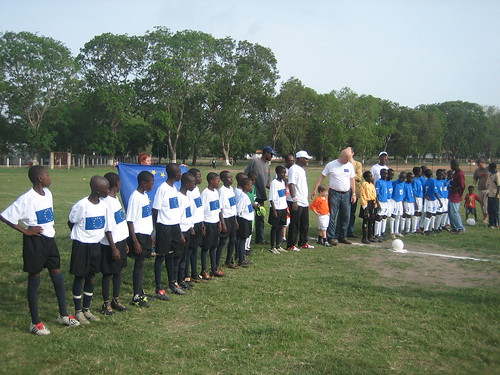 History repeated itself as Accra was witness to some amazing matches between some of the heavyweights of World football last Saturday May 6th.
As hordes of fans descended upon University of Legon, kick-off took place at 7 AM, with a clash between the European Union team and Italy. The Italians, in their classic azurri outfits, started defensively against the highly talented EU side. But this was to no avail. One attacking wave after another swept upon the Italian side from the EU youngsters, who were eagerly supported by a large crowd of charming followers. As the EU's 2-0 victory was confirmed, the Italian fans were silent as a grave in the midst of the EUphoria.
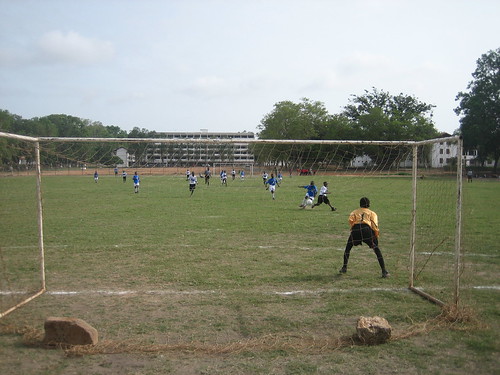 However, the expectations caused by the EU's victory were only to be shattered in the second round. Netherlands had dispatched the French with a resounding and entertaining 6-4 victory, and were now to face the noble EU youngsters in what could easily become a modern classic of football. The EU team fought hard to stay in the match, but in the end to no avail against the mighty orange attacking machine. The fans however, displayed fairness and thanked their team for their marvelous performance.
The preliminary round matches saw some more exciting football. In a preview of the upcoming World Cup 2006 clash, the Black Stars from Ghana faced the Czech Republic. In a highly awaited match, both teams displayed fair play and friendliness. In spite of this, the Ghanaians had no quarrels in pounding some Czech fufu for their breakfast. The Czechs were sent home with a resounding 3-0, and should not be expecting any gifts in Germany either.
In spite of their glorious start, the Ghanaians could not keep it going, as they ran into the well-oiled German football machine in the next round. The Germans had defeated Spain in a match where the result was the same as their encounter in the Euro 1988. The Germans defeated the charming home-team 3-0, and were more and more looking like the ones to defeat.
A highly awaited encounter in the preliminary round was England-Denmark. As so often happens in these matches, the Danes were far superior to the Spice Boys, who were dispatched with 3-0. Wayne Rooney's injury was not the only thing causing headaches in Britain this weekend!
The final round of the tournament was as exciting as football can get. First, Germany faced the Danish Dynamite in a repeat of the legendary 1992 European Championship final. In a nail-biting encounter, none of the teams managed to score, so they had to proceed to a nerve-wrecking penalty shootout. The goalie of the German team proved as cool as the legendary Harald Schumacher against Mexico in 1986 World Cup, and put the Germans in the final.
While the Danes had to conform to third place, the wind of history swept across the fields in Legon that hot Saturday afternoon. The final was to be one of the most classic encounters in football history: a repeat of the 1974 World Cup final, of the Euro 1988 semifinal, or the World Cup 1990 last-16 match. None other than the giants from the Netherlands and Germany!
As the fans from each team lined up their support for another clash of Titans, the teams got ready for another nerve-wrecking and close encounter. The orange attacking waves swept over the German side, the Germans kept their cool in the hot afternoon. In what was a repeat of football history, the German team took home the title after an amazing penalty shootout, where only the strongest managed not to faint.
In the end, the true winners of the tournament were all the Ghanaian u-12 teams who could participate in this fun tournament! They were all the true stars of the day, and I was only a lucky football fanatic who happened to be around!
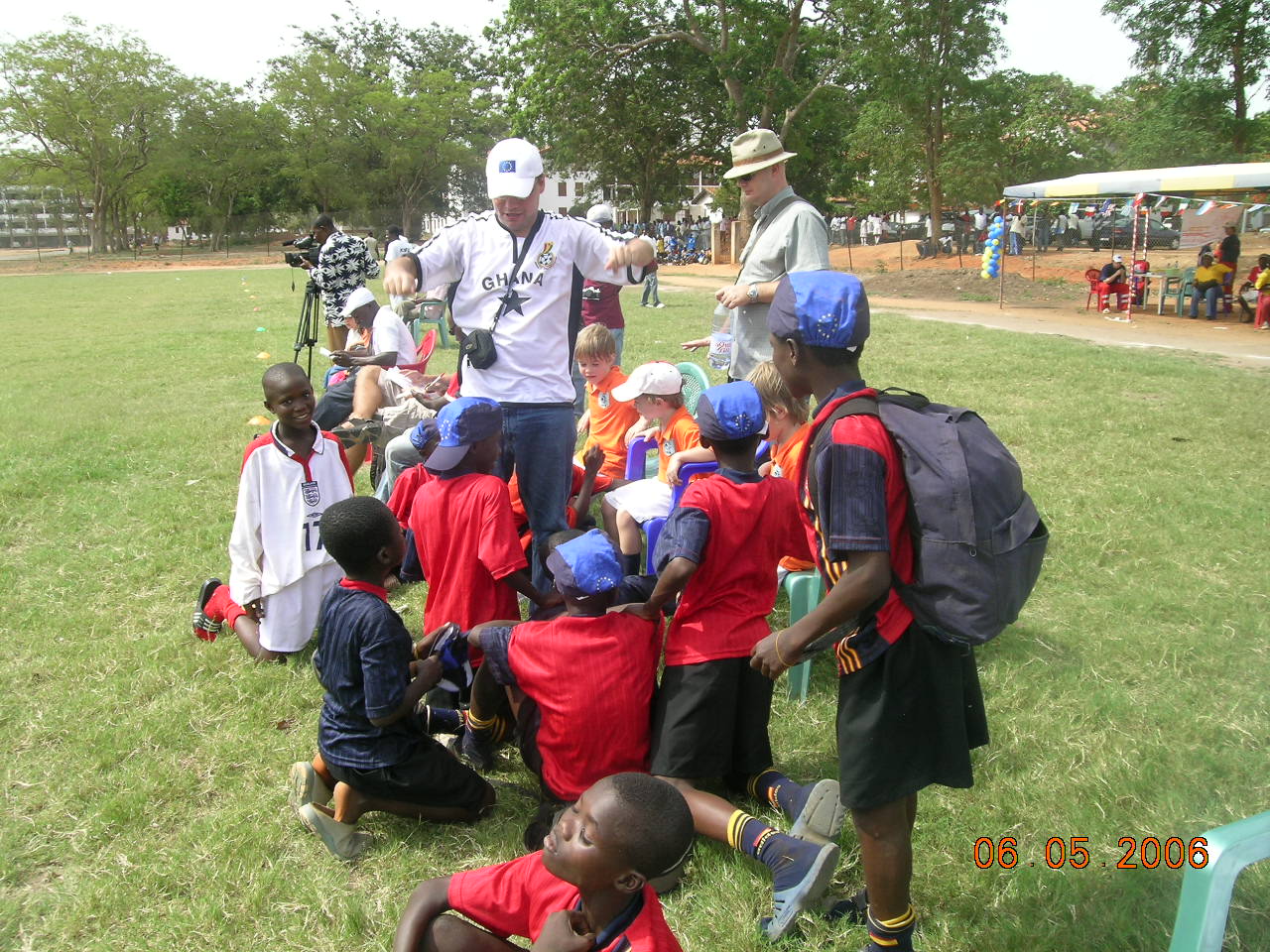 Playing around
Thursday, March 03, 2005
The greatest coach of the 20th century
One of the greatest football coaches of all time just passed away. Mr. Rinus Michels was the brain behind some of the greatest football ever seen: the total football of the Netherlands. With a long line of great players to complement him in Ajax Amsterdam, he was instrumental in creating the Ajax team that won three European cup titles in a row.
He was also Spanish champion with FC Barcelona, and in 1999 he was deservedly named as Coach of the century by FIFA.
In 1974, he led the Netherlands all the way to the World Cup final, displaying some of the most entertaining attacking football ever seen.
The Orange football machine lost the final in Munich in 1974 to the West German hosts. But 14 years later, in 1988, he was behind the Dutch triumph in the European Championship: at the very same stadium, where they had lost the 1974 final, the Netherlands defeated the USSR 2-0.
Mr. Michels gave a lot to Ducth football, and a lot to all football fanatics. He will be greatly missed."
He was also Spanish champion with FC Barcelona, and in 1999 he was deservedly named as Coach of the century by FIFA.
In 1974, he led the Netherlands all the way to the World Cup final, displaying some of the most entertaining attacking football ever seen.
The Orange football machine lost the final in Munich in 1974 to the West German hosts. But 14 years later, in 1988, he was behind the Dutch triumph in the European Championship: at the very same stadium, where they had lost the 1974 final, the Netherlands defeated the USSR 2-0.
Mr. Michels gave a lot to Ducth football, and a lot to all football fanatics. He will be greatly missed."
Subscribe to:
Posts (Atom)